Art & Parkinson’s
Love letters from a caregiver
Working in Dualities: the story of this project
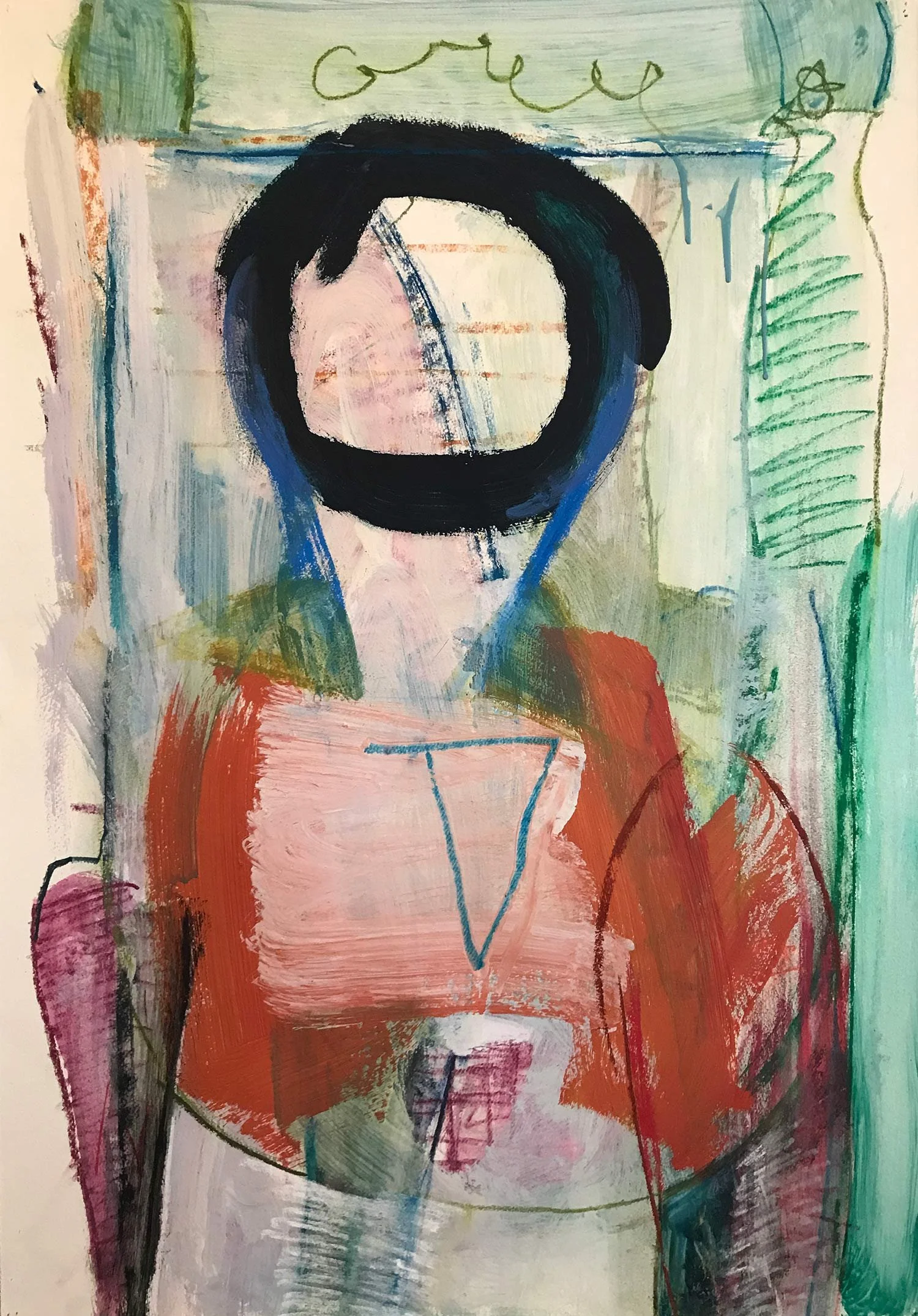
Ever since my husband Hal was diagnosed with Parkinson’s in 2009, I have been living in a constant state of wild contradiction. Our journey has been couched in odd-couple dualities—the way we are both alone and together in this, the waves of fear and calm, the ageless push and pull between grief and acceptance. On the one hand, dwelling in the present, cherishing life’s fleeting moments. On the other hand, preparing for death, even wishing for it. Over the years, I have explored these paradoxes through art and writing.
Art and writing are themselves a duality of sorts. Both are, as the philosopher Suzanne Langer puts it, a way of finding form for feeling; whereas art expresses thoughts and feelings that words can’t, writing expresses the unseen. The pairings in the following pages were created independently and only later brought together to play off one another.
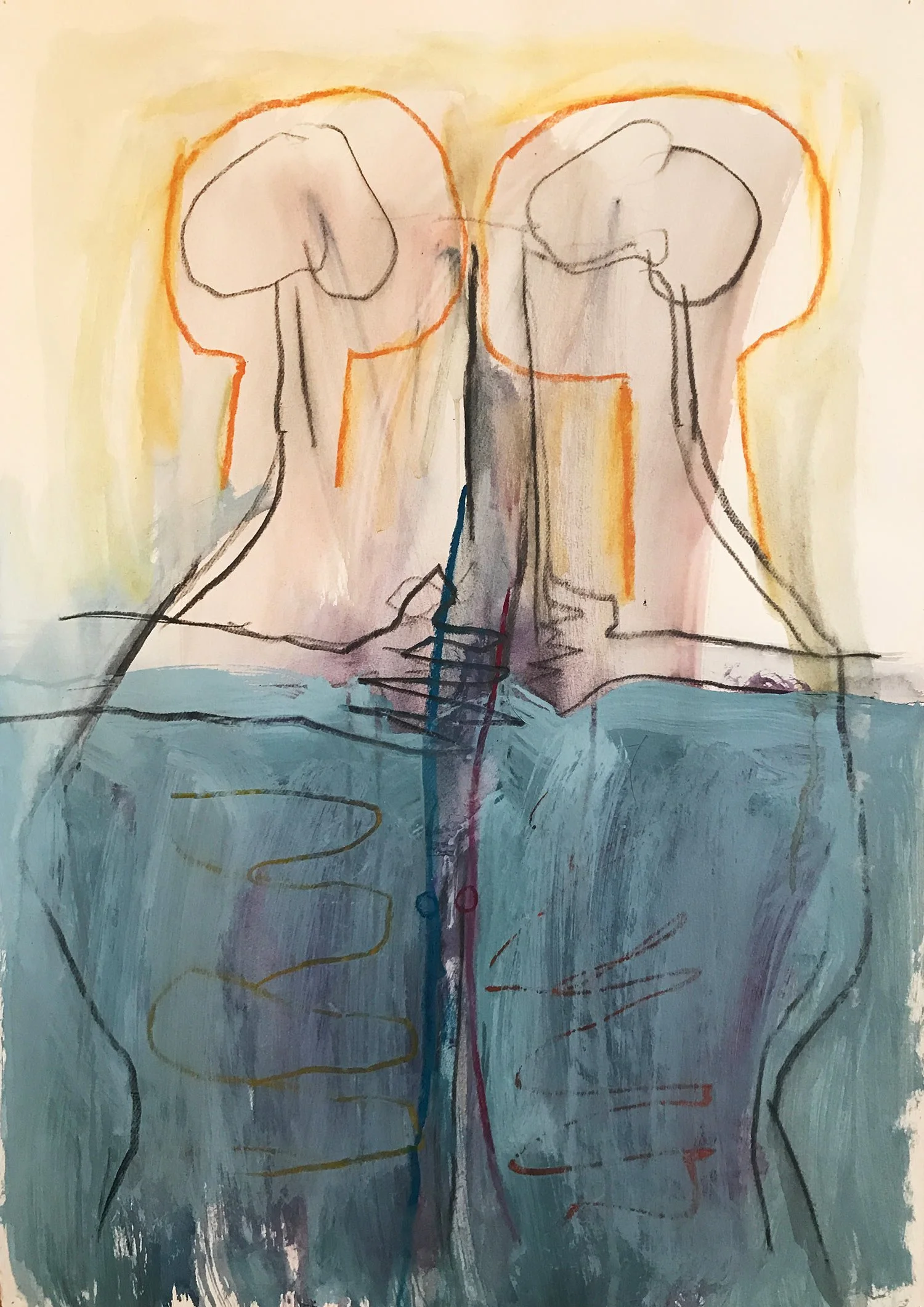
When my husband received his diagnosis, I immediately started a journal. I knew that I would need a tool, a means of processing what was happening to the two of us. Even though I am a visual artist, the art related to Parkinson’s actually came more slowly, less deliberately. It took me some time to realize that the many recurring images such as hands, containers, and knots that had begun to crop up in my art were actually related to our struggles. Only then did my artwork about Parkinson’s become more conscious.
I started noticing that my emotions were coming in pairs—Hope and Despair, Fear and Calm—jumping wildly from one to the other, banging up against each other moment by moment. I wondered why these swings were so extreme. Is it the brain’s way of seeking balance when it is thrown so roughly off balance? I couldn’t answer that question. The best I could manage was to wrangle these conflicting emotions into my journal or my art and keep going.
The work I was doing on both page and canvas began to take on new meaning along the way. Once tools for my own survival, I now recognize these pieces as doorways into conversations with other people—hard conversations about anger, sadness, frustration, grief—that are difficult to initiate in any other way. Showing Hal a painting that depicts my anger allows us enough distance to be able to talk without the barrier of defensiveness and highly wrought emotions. When speaking with my therapist, the art offers a direct path into meaningful and healing conversation.
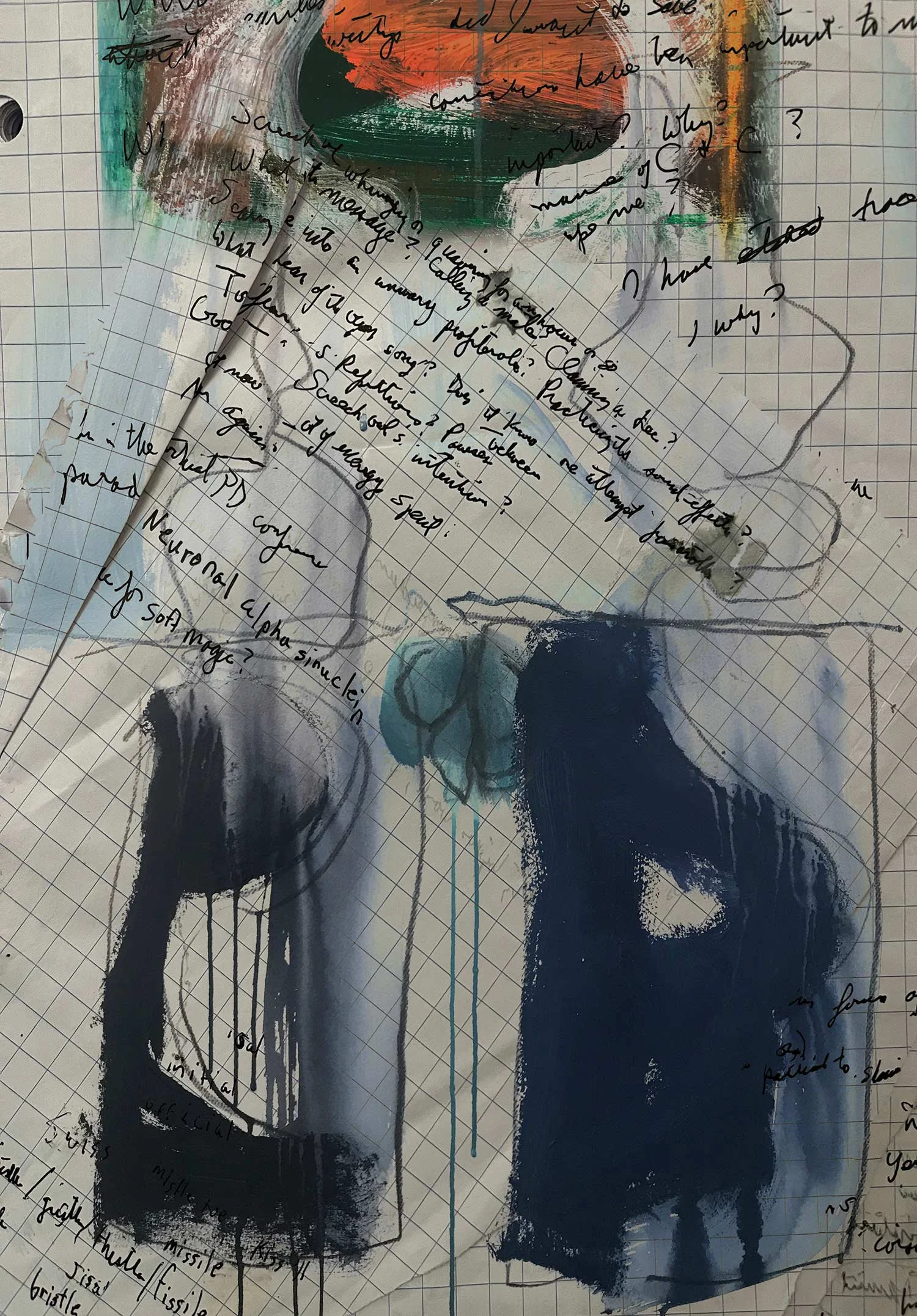
At the same time, the art and writing that I have produced during the Parkinson’s years of our lives became like souvenirs for me, carried back from those moments of wonderful connection and moments of painful disconnection (both from myself and Hal) that have defined the twists and turns of this journey. I am reminded that both sides of each duality are equally real and inevitable. Even when I feel myself going numb, I read the words, look at the images my hands created, and feel those feelings again. Then I find my way back to the path and keep moving forward.
The story of Parkinson’s does not start at Point A and progress logically and predictably to Point B. It is circuitous, contradictory, cyclical, always changing. Thus, rather than trying to offer a straightforward narrative that starts at the beginning and moves to the end, I have organized this website around these pairs of difficult—but ultimately rich and rewarding—ideas that have defined my experience as a caregiver. I hope that, wherever you are in this journey, my words and my art resonate with you and validate some part of your own experience.
About the Art
All of the works are on paper.
Materials include:
Acrylic paint
Colored pencils
Caran D’ache water-soluble crayons
Oil pastels
Charcoal
Graphite
Photoshop