Art & Parkinson’s
Love letters from a caregiver
Alone & Together
Early Days
We were taking part in a Parkinson’s study for couples. It was in the early days of our experience.
We went into their office every six months for several years, and they would put us through a battery of cognitive and social tests. At the end, they would ask us how we felt we were doing. It was like asking someone how they feel in mile three of their marathon. Hal and I were both intent on proving that his Parkinson’s wasn’t going to get us; it wasn’t going to reduce us, cripple us—and so we did our best to put a good spin on things in these interviews.
But we were beginning to sense that we were in a strange new territory. Walking into the woods holding hands, without a map, without gear, increasingly less confident, but still determined to be survivors.
Maybe just being paid attention to, feeling like we mattered, changed our outcome. The time in this study was our first witnessed experience of our Parkinson’s partnership, thinking of ourselves—and being treated as—a team.
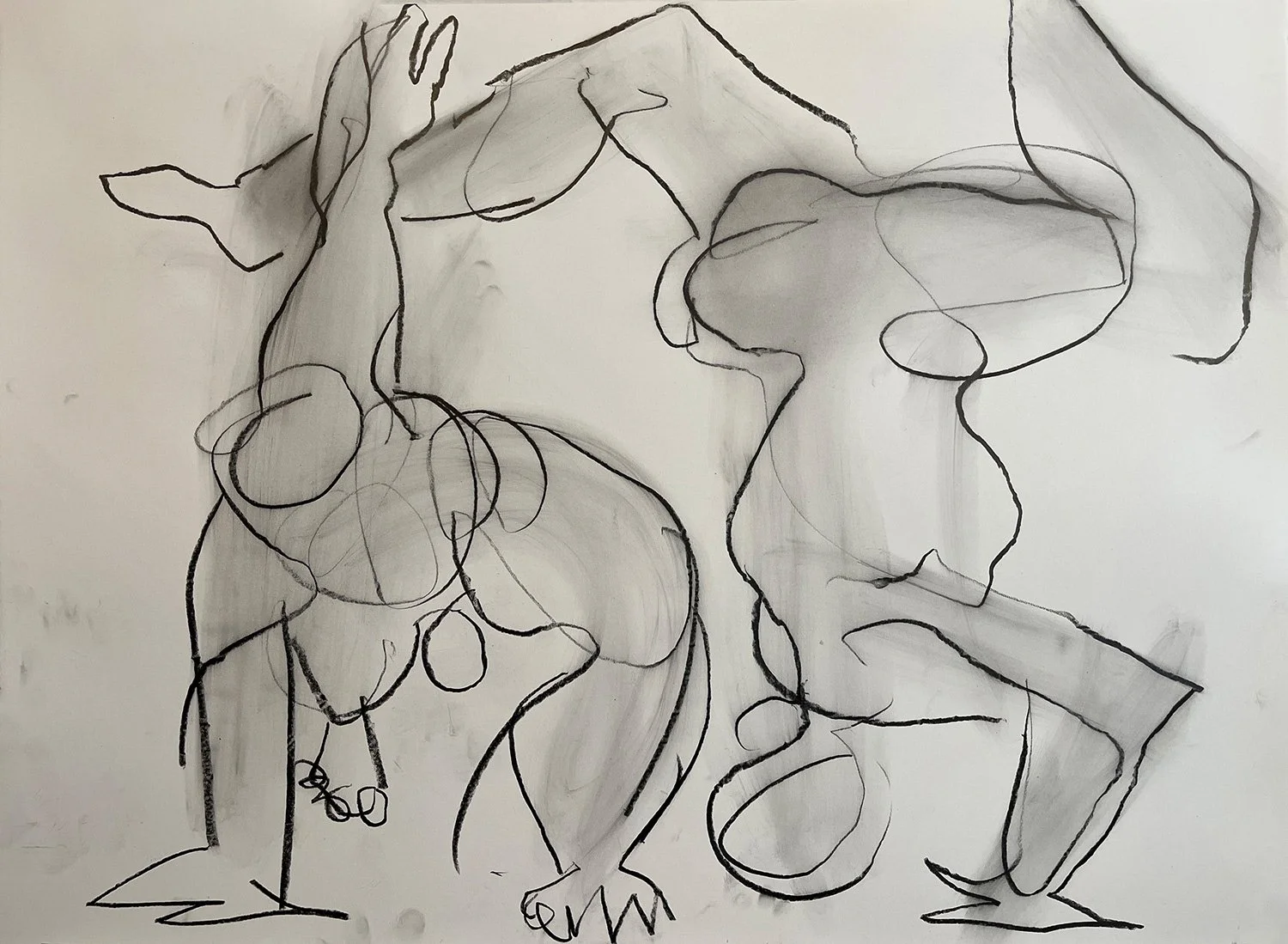
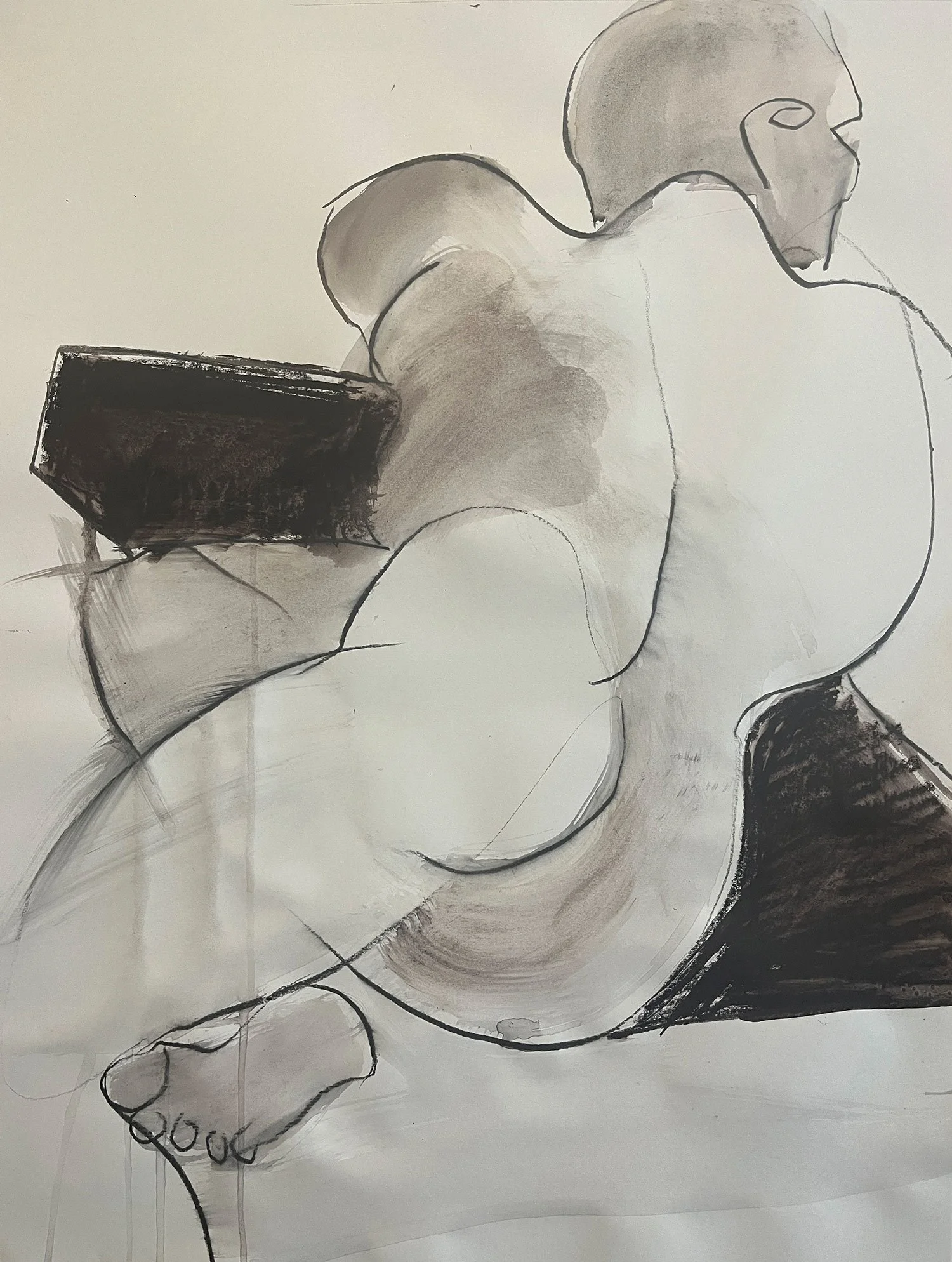
And yet it has been an alone/together journey. We exist on two different sides of a fissure in the earth along our path. Sometimes the crack widens, the land separates, and we can barely see each other. But just as often, the plates shift, the earth fills in, and we are together on the same soil again.
These drawings and writings are my souvenirs – a record of our travels – a reminder of our moments alone and together.
The Knowledge
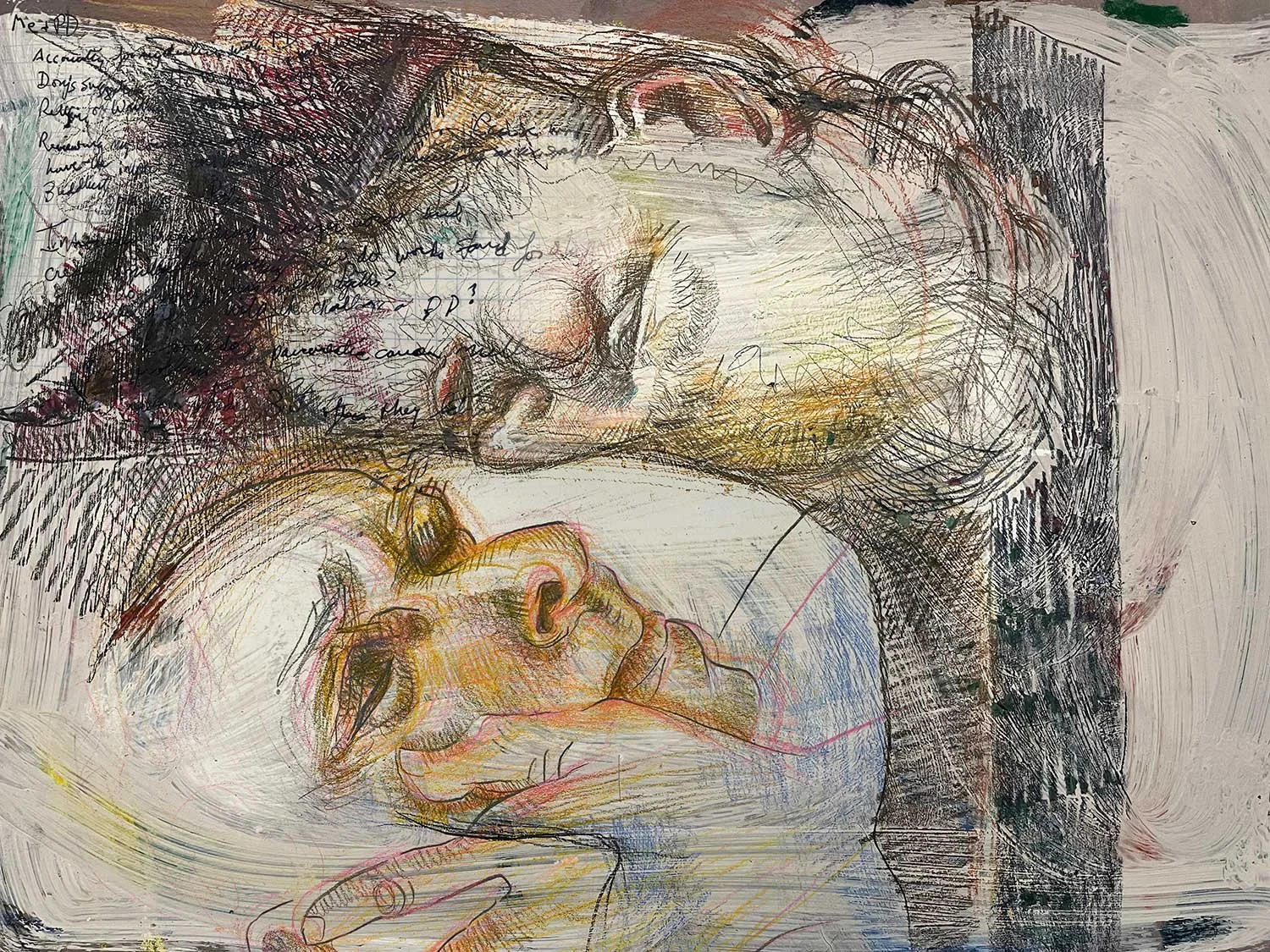
One morning, I was telling Hal about a dream I had the previous night. We spent some time pulling on its threads, marveling about how my sleeping brain concocted it out of the pieces of my day—and of my life. I was feeling the pleasure of being known so well by him that he immediately grasped what the dream meant to me.
The pleasure was mixed with sadness. When Hal dies, I thought, he will take this knowledge of me with him. The knowledge of how the particular strands of me are woven together. I didn’t share with him my ruminations about his death, but I expressed my gratitude about how lucky I feel that he holds “the knowledge” of me—like those London taxi cab drivers that hold the knowledge of London’s 25,000 criss-crossing streets. They know how the streets are all connected and how to get from one side of the city to the other the fastest way—so their passengers can sit back knowing that they are in good hands.
Alone and Together
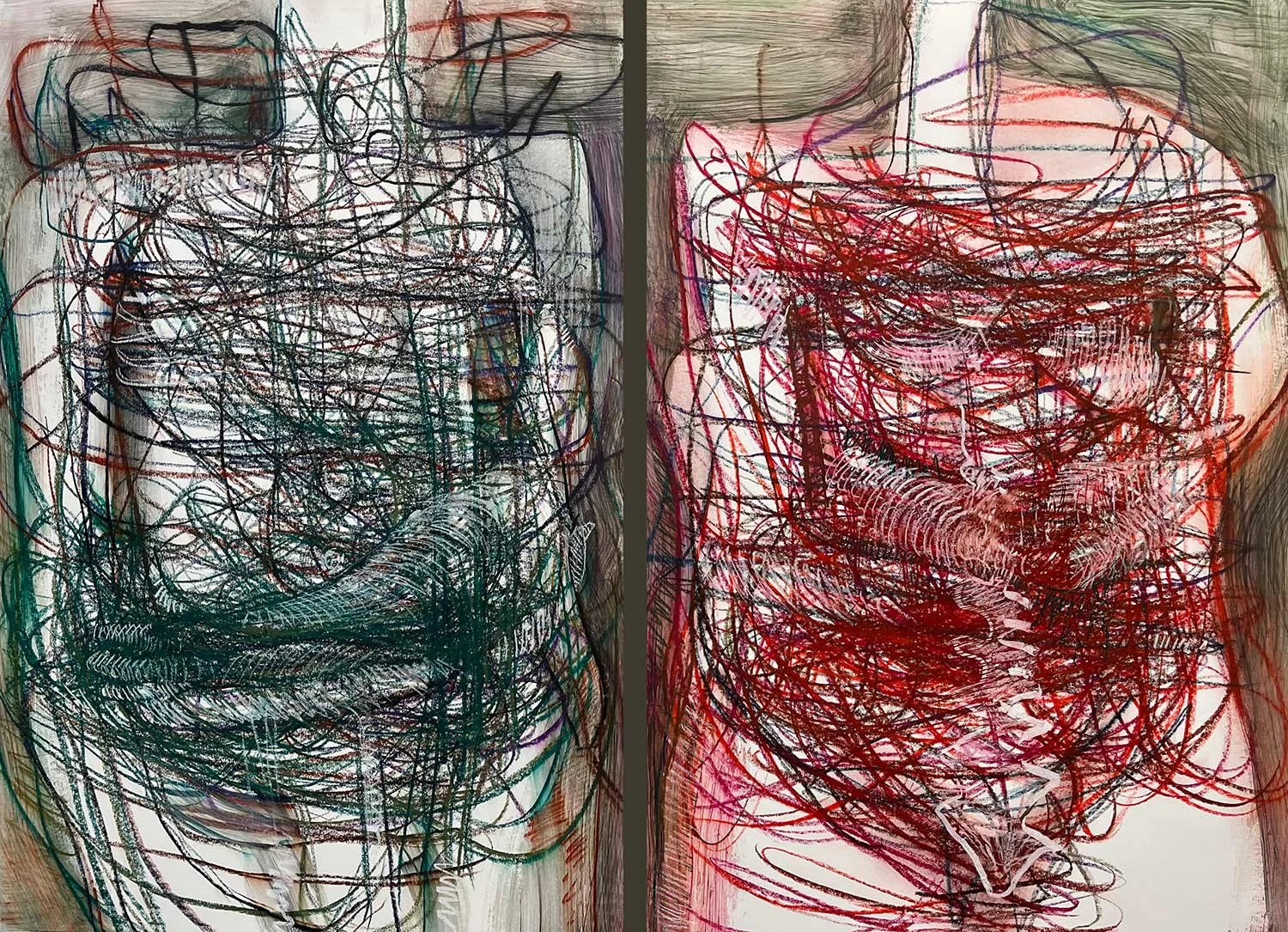
I showed this diptych that I had painted to Hal. “They are opposites,” he pointed out. That was something I hadn’t been conscious of when I created them, but it was an idea I think about a lot in other contexts. How I daily, dramatically, swing between opposite thoughts and feelings: caring/disengagement, love/anger, sadness/joy, and on and on.
Now, looking at these two half-bodies, I see myself and Hal made up of the same tangled lines, but opposites in color. Opposites in who we have become, in our unchosen separate roles. Lashed together with these lines, these currents, the same and different blood cells flowing through this complicated circulatory system.